
When people think of pollinator gardens, they usually picture blooming meadows in spring and summer. But as the seasons change, pollinators like bees, butterflies, and hummingbirds are still active—and still in need of food and shelter. That’s why creating a pollinator-friendly garden for fall is just as important as planting one in spring.
Whether you’re a seasoned gardener or just starting out, you can make a meaningful impact by supporting pollinators during the cooler months. In this guide, we’ll cover the best fall-blooming plants for pollinators, design tips, and sustainable practices to keep your garden buzzing through autumn.
Why Pollinators Need Help in the Fall
Pollinators play a vital role in ecosystems, helping to fertilize plants so they can produce fruits, seeds, and new plants. But in fall, many natural food sources begin to disappear just when these creatures are preparing for migration, hibernation, or overwintering.
Fall is a critical time to offer:
- Nectar-rich flowers for late-season energy
- Habitat and shelter for overwintering bees and insects
- Pollen sources for queen bumblebees preparing to nest
Creating a pollinator-friendly fall garden supports not just individual insects, but entire future generations.
Best Fall-Blooming Plants for Pollinators
Choosing the right plants is key to keeping your garden active and attractive for pollinators in fall. Here are some top options:
1. Asters (Symphyotrichum spp.)
- Bloom Time: Late summer to frost
- Pollinators: Bees, butterflies
- Notes: Native varieties are especially valuable and long-blooming.
2. Goldenrod (Solidago spp.)
- Bloom Time: Late summer to mid-fall
- Pollinators: Bees, butterflies, beneficial wasps
- Notes: Often wrongly blamed for allergies (that’s ragweed), goldenrod is a powerhouse plant for fall pollinators.
3. Sedum (Hylotelephium spp.)
- Bloom Time: Late summer to frost
- Pollinators: Bees, hoverflies
- Notes: Varieties like Autumn Joy are not only drought-tolerant but also pollinator magnets.
4. Joe-Pye Weed (Eutrochium spp.)
- Bloom Time: Late summer into fall
- Pollinators: Monarch butterflies, bees
- Notes: Tall and striking, ideal for back-of-the-border planting in pollinator gardens.
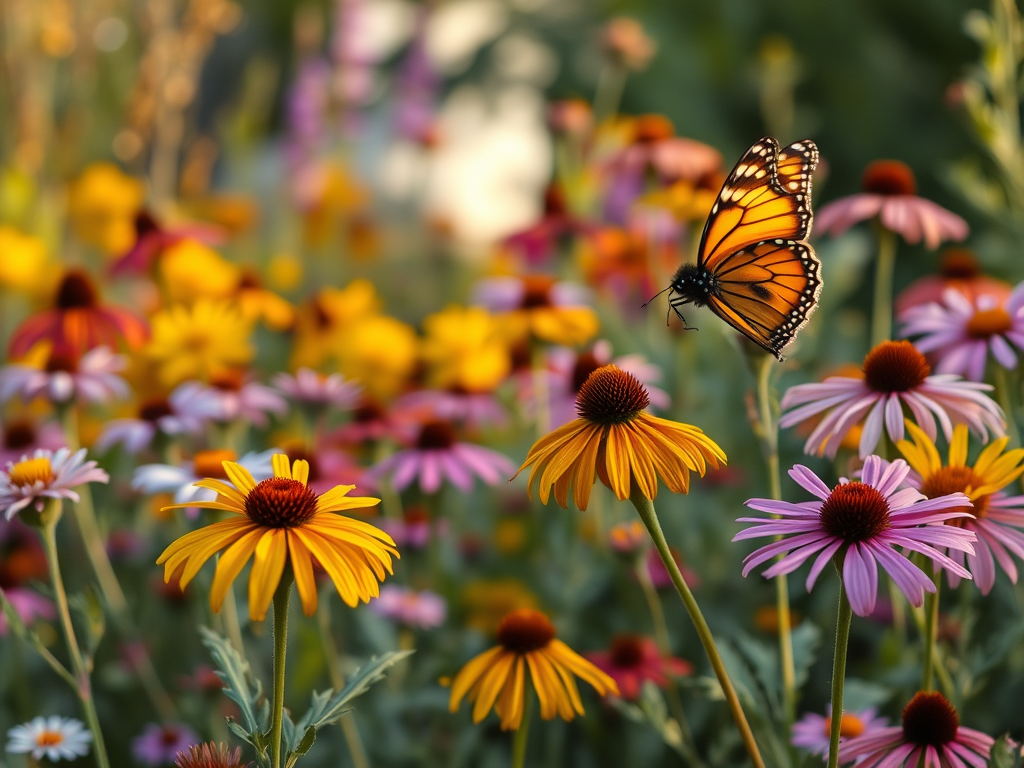
5. Coneflowers (Echinacea spp.)
- Bloom Time: Summer into fall
- Pollinators: Bees, butterflies
- Notes: Leave seed heads standing to feed birds and shelter insects.
6. Russian Sage (Perovskia atriplicifolia)
- Bloom Time: Late summer to early fall
- Pollinators: Bees, butterflies
- Notes: Deer-resistant and drought-tolerant, perfect for low-maintenance landscapes.
SEO Keywords: fall flowers for pollinators, best plants for fall bees, butterfly garden in autumn
Additional Pollinator Garden Features for Fall
It’s not just about the flowers. Pollinators need a complete habitat, especially as they prepare for colder months.
1. Provide Shelter
- Leave leaf litter in garden beds
- Avoid cutting back all perennials—hollow stems can serve as nesting sites
- Include brush piles or native grasses for overwintering insects
2. Avoid Pesticides
Fall is not the time to spray chemicals. Even organic treatments can harm pollinators. Adopt pollinator-safe gardening practices by avoiding insecticides altogether.
3. Add a Water Source
A shallow dish with pebbles or a birdbath provides clean water for thirsty pollinators. Just be sure to clean it regularly to prevent mosquito breeding.
4. Plant in Clumps
Large, clustered plantings make it easier for pollinators to locate food. Group at least 3–5 of the same plant together for better impact.
Tips for Designing a Fall Pollinator Garden
- Choose native plants whenever possible—they’re better adapted to local wildlife.
- Plan for continuous bloom by staggering varieties that flower from late summer through first frost.
- Mix heights and textures to provide diversity and habitat structure.
- Use organic mulch to protect soil life and overwintering insects.
- Label your plants if you’re part of a community garden or educational space.
Long-Term Benefits of a Fall Pollinator Garden
Creating a pollinator-friendly garden in fall isn’t just a seasonal task—it’s an investment in year-round biodiversity and ecological health. Here’s what you gain:
- Healthier spring gardens, thanks to better pollination
- Increased bird activity (many birds feed on insects and seeds)
- Natural pest control via predatory insects and beneficial pollinators
- Stronger ecosystem resilience in your local environment
Final Thoughts: Make Fall Count for Pollinators
As summer fades, your garden can still serve a vital purpose. By planting the right fall flowers, offering habitat and shelter, and avoiding chemicals, you can create a pollinator haven that continues to buzz with life well into the colder months.
Even a few intentional choices can make a big difference—every flower, every patch of native habitat counts.
 The Planter's Companion